What views, readers and followers mean on Inkroost
Views count visits, readers count the signed-in people who started your series, and followers count the people who asked to hear about your next chapter. Here is how each one is counted and how to grow it.
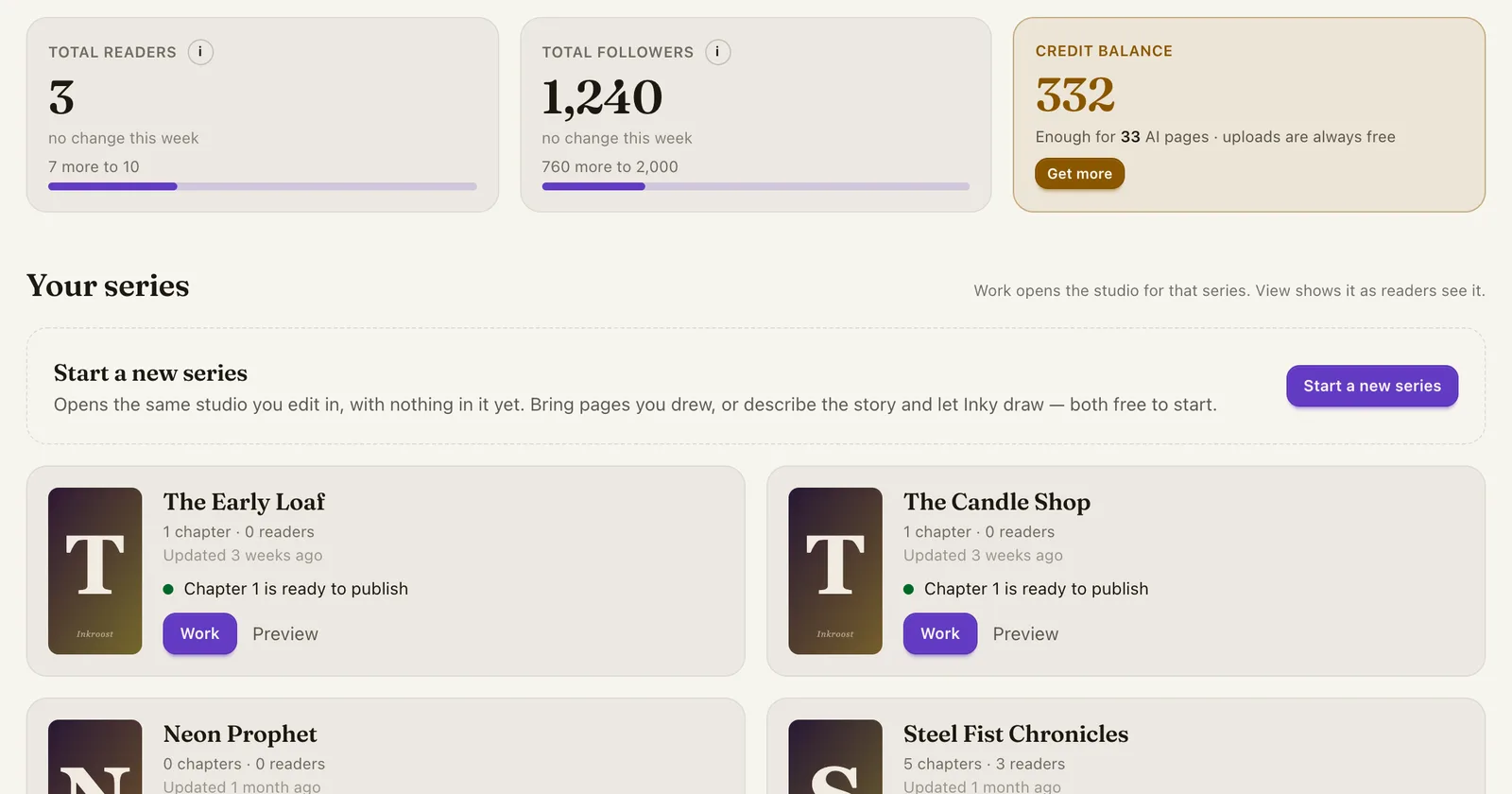
Your series shows three numbers that sound alike: views, readers and followers. They count different things, so they rarely match. Here is what each one means and how it is counted.
Views: how often your work is opened
A view is one visit to your series page. You see the total as Views on your public series page, and series view milestones are counted from it.
Each chapter keeps its own count of the same kind, shown as reads on the chapter in the studio. An animated episode counts views on its watch page in the same way.
How views are counted:
- Anyone counts, signed in or not.
- One person is counted at most once every six hours for the same page, so flipping back and forth does not pile up views. Coming back later in the day does count again.
- Search engine crawlers, link previews and other automated visitors are left out.
- Your own visits to your own series while signed in are left out, and so are Inkroost team and test accounts.
- A series view and a chapter read are separate. Opening a chapter adds a read to that chapter, not a view to the series page.
When a series passes a views milestone, you get an email, and some milestones add free credits for your next chapter.
Readers: the people who started your series
A reader is a signed-in person with your series in their library. You see the count as readers on each series in your studio, as Total readers on your studio home, and as Distinct readers in Analytics.
How readers are counted:
- Your series goes into someone's library the first time they open one of its chapters while signed in, or when they press Add to Library on your series page.
- Each person counts once per series, however many chapters they read or how often they come back.
- People reading without an account show up in your views and reads, but not in your readers.
- Total readers adds up your series, so someone reading two of your series counts once for each.
- In Analytics, Distinct readers counts the people who started one of your series in the dates you picked, and Library adds counts every series they started, one per series.
Followers: the people waiting for your next chapter
A follower is a signed-in reader who pressed Follow on your series page. You see the count as Followers on your series page and as Total followers on your studio home. Pressing it again (it then reads Following) unfollows, and the count goes back down.
When a new chapter of yours goes live, every follower of that series gets a notification, and an email too if they have turned on new chapter emails.
People can also follow you from your profile page. That is a separate count, shown as followers on your profile, and you get a notification each time someone new follows you there (and an email, if you have turned that on).
How they fit together
- Views and reads count visits, from anyone.
- Readers count people who started your series while signed in.
- Followers count people who asked to be told about your next chapter.
A visitor becomes a reader by signing in and reading, and a reader becomes a follower by pressing Follow. So views are usually the biggest number and followers the smallest.
How to grow each number
- Reply to comments. The person you answer gets a note that you replied. Readers who hear back are more likely to come back for the next chapter, and the daily comment email has a Read and reply link under each comment.
- Publish on a rhythm readers can count on. Every new chapter reaches all your followers, and a series that keeps going gives new readers a reason to press Follow.
- Share it. The Share button on your series page copies its link or posts it to X and Reddit, and the Promo kit in the studio makes pictures cut for each place you post, with your series link on them. Every visit from a post is a view.
- Check Analytics. It shows the readers and followers you gained in the dates you pick, and how many recent readers did not come back.