Pages that play with their layout
When your panels don't say how the page is laid out, Inkroost now picks a layout move for each page, like a close-up inset laid over another panel or a figure reaching out of its frame, so pages stop coming out as tidy grids.
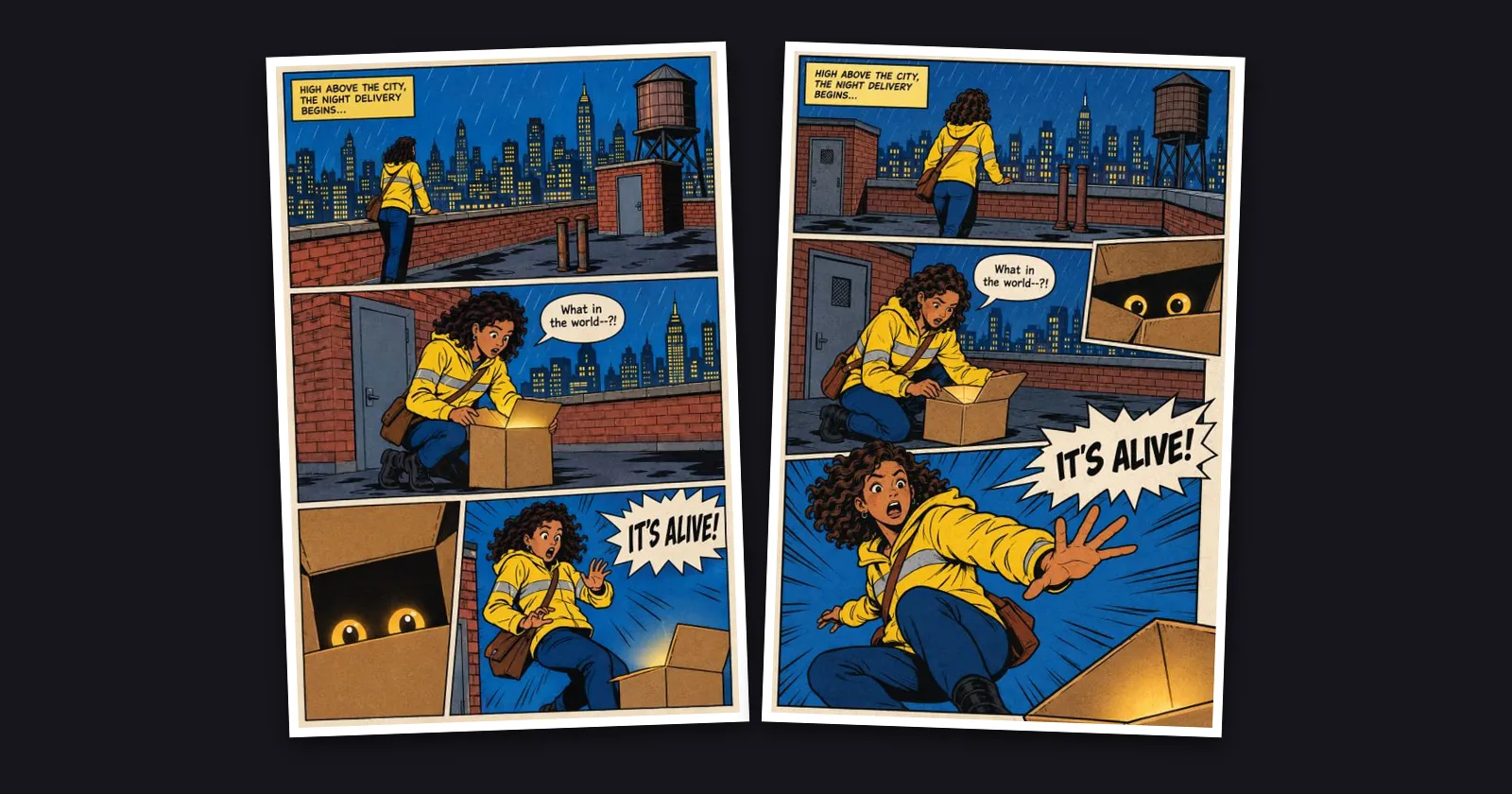
What changed. Real comic pages play with their layout: a close-up laid over the corner of another panel, a thin strip across the top, a character reaching out of their frame at the big moment. Our pages mostly came out as tidy grids, because the drawing follows what each panel says, and most panels only say what happens. Now, when a page's panels say nothing about the layout, Inkroost reads the beats and picks up to two layout moves for that page, and a different mix on the next one. The picture above shows the same four beats before (left) and after (right).
Your layout comes first. If you or Inky describe the layout yourselves (an inset, a splash, a borderless panel, a figure breaking out of the frame), the page is drawn exactly as written and nothing is added.
Pages written as one line. A page you write as a single line in the drawing screen is now asked to vary its panel sizes and let one panel overlap another at the key moment. The change there is gentler: when you want a particular layout, describe it in the line.